JULY 22, 2025
POSTED BY:
BEN SCHLEUNIGER,
CEO & CO-FOUNDER,
ORBITAL OPERATIONS
PRESS: INFO@ORBITALOPS.TECH
“When people hear about space threats, they tend to assume it’s either science fiction or decades away. The reality is it’s happening right now.”
“We don’t just need more satellites. We need a way to actively protect what’s already there.”
Straight to the point
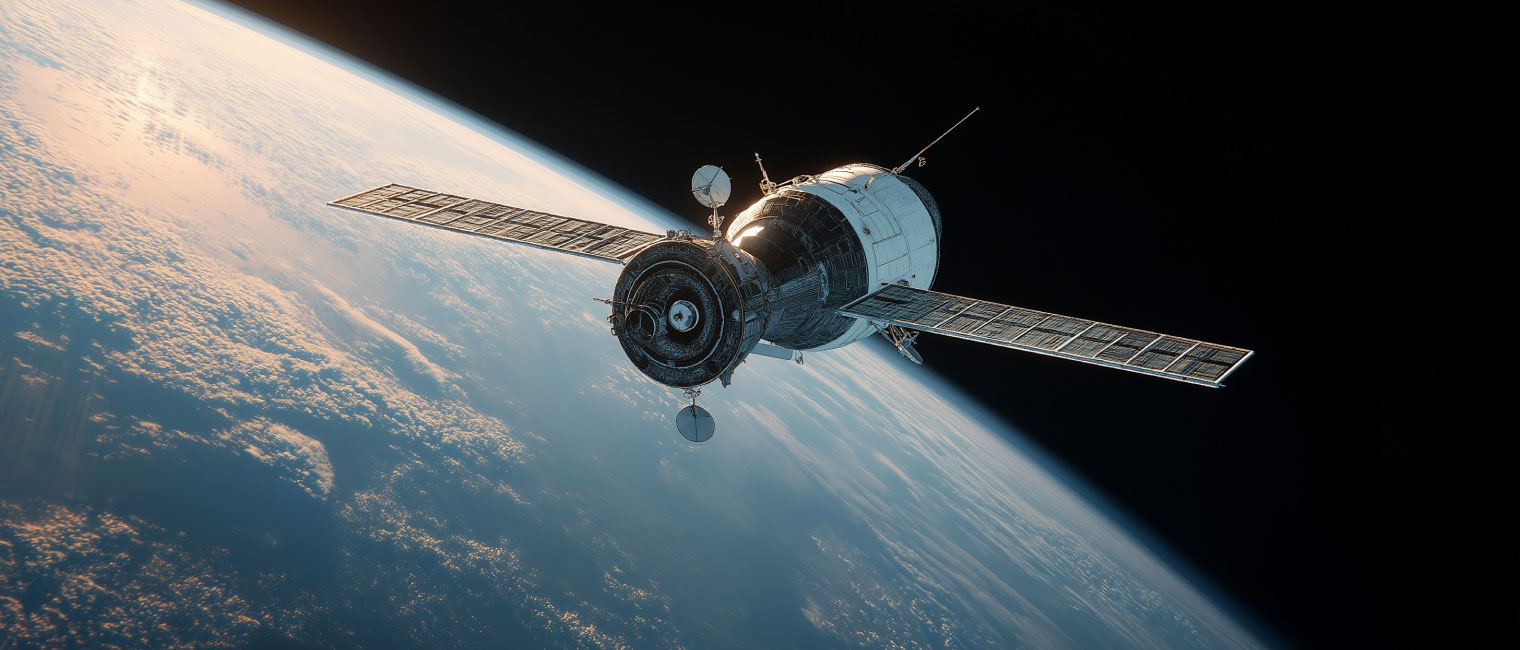
Most people don’t realize there are already military operations happening in orbit. China’s SJ-21 satellite physically grappled another spacecraft and pulled it out of geosynchronous orbit. Just recently, that same vehicle was refueled by SJ-25, giving it the ability to stay on station and act again. Russia has launched COSMOS 2588 into a near co-orbit with what’s suspected to be a U.S. reconnaissance satellite. Every four days, due to orbital mechanics, it passes close by.
These aren’t demonstrations. They’re capabilities, already deployed and already operating. And right now, the United States has no way to respond.
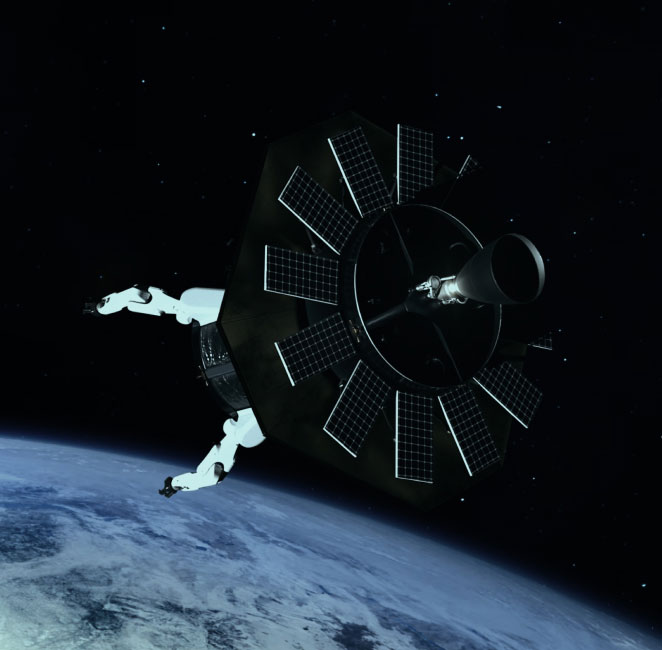
That’s why we’re building Astraeus. It’s a high-thrust, refuelable space vehicle designed to address the exact threats that are already playing out above our heads. It doesn’t just move. It defends.
What’s actually going on up there
When people hear about space threats, they tend to assume it’s either science fiction or decades away. The reality is it’s happening right now.
In 2022, China used SJ-21 to grab and relocate another satellite, proving they could physically interact with objects in GEO. This year, in 2025, they refueled that same spacecraft using SJ-25, extending its life and range. This wasn’t research or some minor component advancement. It was a deliberate, successful demonstration of maneuverability, servicing, and persistence.
Meanwhile, Russia launched COSMOS 2588 into a slightly higher orbit than one of our National Reconnaissance Office (NRO) satellites. Due to the orbital configuration, it periodically closes the distance every 4 days and passes nearby. COSMOS 2588 is believed to be carrying a kinetic weapon. If it were an aircraft flying near U.S. airspace, we’d scramble jets immediately to intercept, shadow, and send a message. That’s standard in the air domain. In space, we don’t respond at all because we can’t. There’s nothing with the endurance, speed, or readiness in orbit to do anything.
Why this matters
We’ve made massive progress in launch cadence. Just last year, Falcon 9 launched 132 times, including 89 missions dedicated to Starlink. It’s an incredible achievement and shows how far commercial space access has come. But that cadence is focused on market demand and LEO infrastructure.
China, by comparison, launched 68 times. It’s fewer, but with a critical difference: most of their launches serve long-term state objectives laid out by the CCP. The Long March rockets are operated by CASC, a state-owned entity. Their moves are strategic. Our moves are market-driven.
That helps explain why we’ve won the launch game and why we’re falling behind in the space operations game.
Understanding the Space Warfighting Framework
The U.S. Space Force has already laid out what it takes to win in this new domain. The Space Warfighting Framework identifies four core spacepower functions:
- Orbital Warfare: the ability to maneuver, project force, and counter threats in orbit
- Space Electromagnetic Warfare: the ability to disrupt or degrade adversary space systems through EM spectrum operations
- Space Battle Management: the ability to detect, track, assess, and coordinate actions across the domain in real-time
- Space Access and Sustainment: the ability to deliver and maintain assets and infrastructure in space
These are not theoretical. They are practical mission sets. And right now, the United States is not equally invested in all of them.
We’ve built incredible capability in intelligence and surveillance. We’ve fielded launch platforms that are second to none. But we’ve underinvested in the systems that actually let us move, defend, and respond out in orbit.
To retain freedom of action, we need presence across all four functions. Without it, we’re left watching others maneuver while we sit still.
What’s at stake
The United States has vital national security infrastructure in MEO and GEO. These aren’t just satellites. They’re the backbone of our military and strategic operations. We rely on:
- AEHF for secure nuclear command and control communications
- WGS for global wideband SATCOM
- MUOS for mobile warfighter connectivity
- DSP and SBIRS for early missile warning
- GPS for positioning, navigation, and timing across every military platform
- OCX and related ground control for tying it all together
These systems weren’t built to maneuver. They weren’t built to defend themselves. They were built under the assumption that space was a sanctuary, that persistence was enough, and that threats were distant. But those assumptions don’t hold anymore. A second move in a conflict could leave them exposed. A third could render them useless.
We don’t just need more satellites. We need a way to actively protect what’s already there.
What mobility enables
Mobility is one of the four core spacepower functions. It enables every other mission area: maneuvering to safety, intercepting a threat, showing presence, or delivering countermeasures. But mobility only works if it’s already in place. You can’t launch in response to an immediate threat. You need to be there before the threat occurs.
That’s why Astraeus was designed to loiter. It uses a 15,000 lbf LH2/LOX engine for rapid movement and is capable of staying on station for years, thanks to our cryogenic propellant management system. And it’s refuelable. That means we can use it more than once, reposition as needed, and turn it into a persistent presence that scales with demand.
This kind of maneuverable vehicle fills a gap the Space Warfighting Framework calls out directly. It supports Orbital Warfare, Space Access and Sustainment, and Battle Management all in one platform.
And it gives us a way to “scramble” in space. To show up, make contact, and send a signal that we saw you, we’re here, and we’re ready.
Looking ahead
We are not in a hypothetical phase of space competition. The space conflict is real, it’s active, and it’s growing more capable every month. The future of strategic deterrence in orbit will depend on our ability to apply presence and mobility, not just once, but repeatedly.
Space is not a sanctuary. It is a military domain. The sooner we accept that, the faster we can act.
Orbital Operations is building Astraeus to make that action possible.
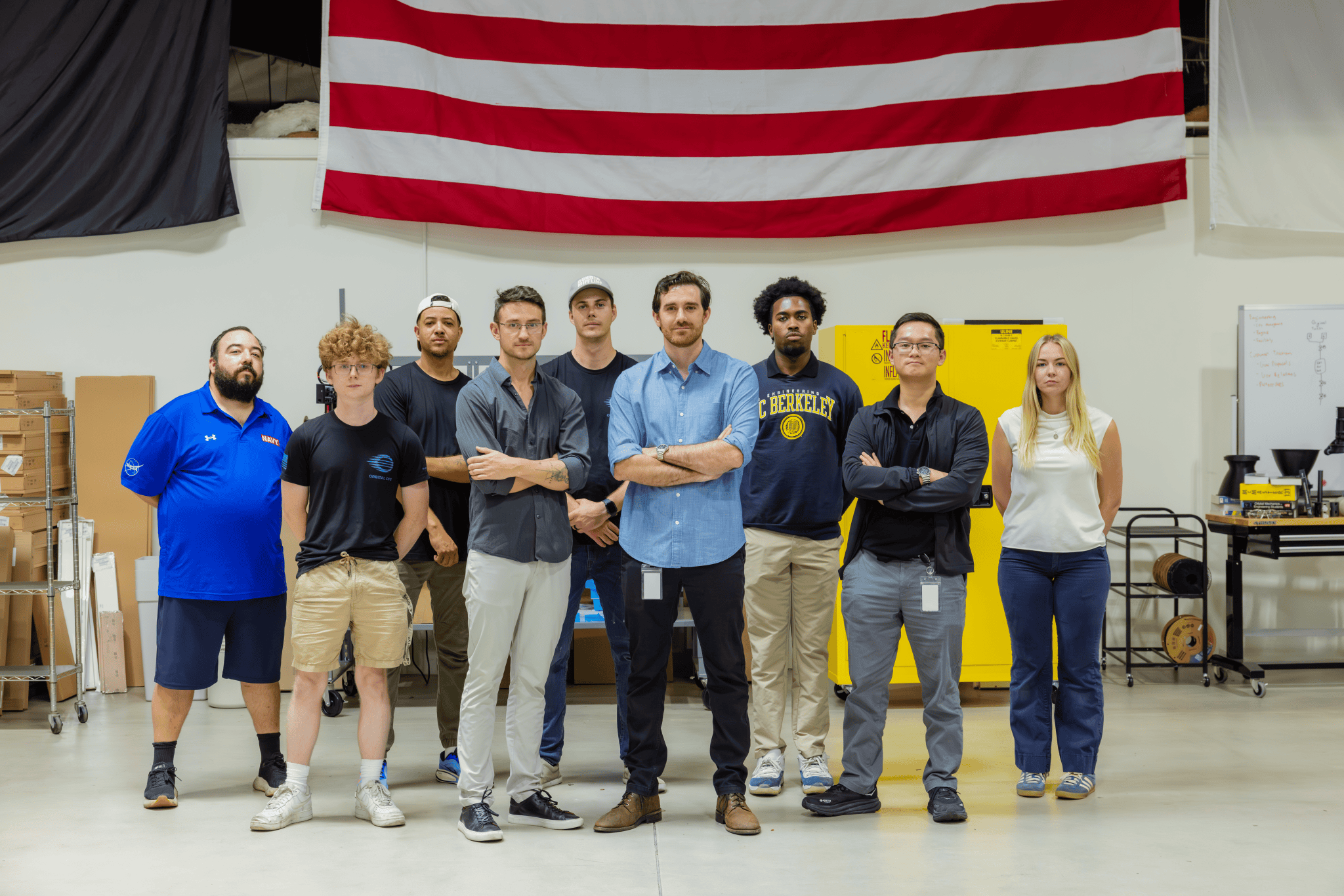
If you’re an engineer who wants to work on the bleeding edge of propulsion, cryogenics, and orbital defense—or someone who understands what’s at stake—we’re hiring.