The Road to Astraeus

The Road to Astraeus

JULY 24, 2025

POSTED BY:
BEN SCHLEUNIGER,
CEO & CO-FOUNDER,
ORBITAL OPERATIONS

“It’s a new kind of capability—one that brings maneuver warfare, rapid repositioning, and orbital presence to national security space. And to earn its place, it has to work on day one. This roadmap is how we make sure it does.”

“It’s a new kind of capability—one that brings maneuver warfare, rapid repositioning, and orbital presence to national security space. And to earn its place, it has to work on day one. This roadmap is how we make sure it does.”

Straight to the point

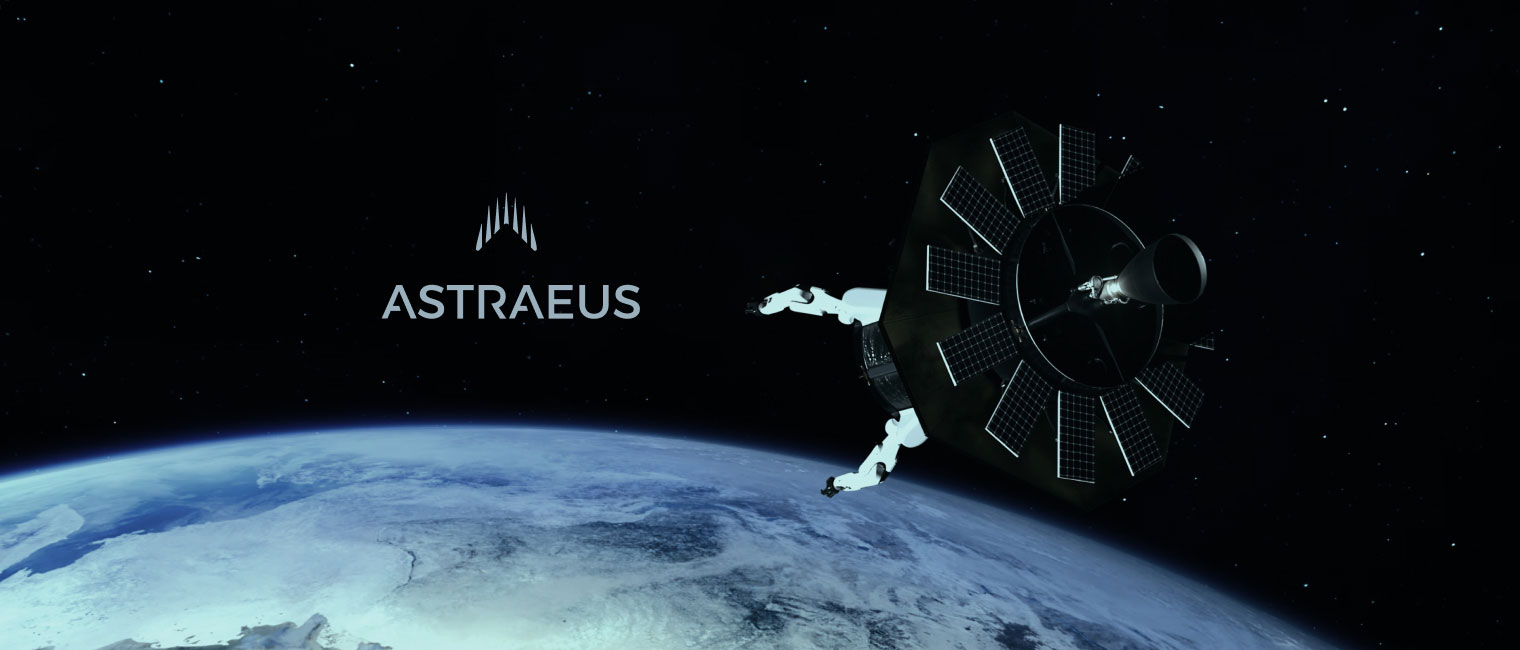
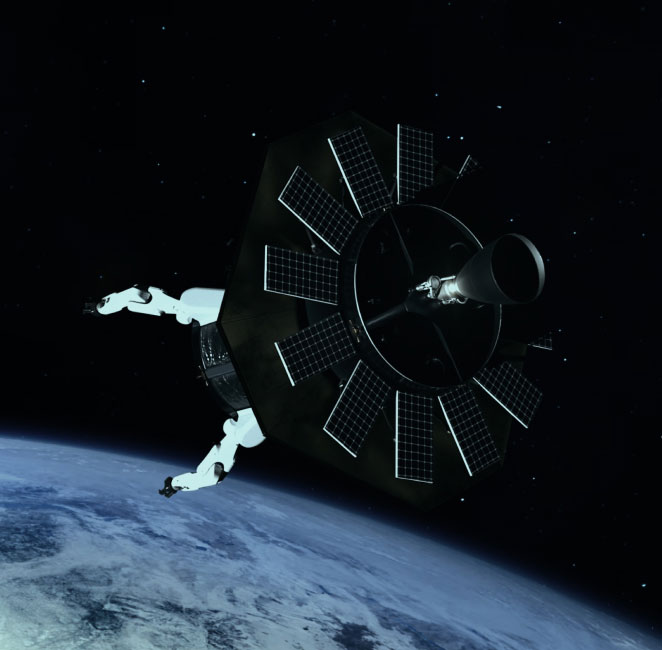
Astraeus is the vehicle we’re building to fundamentally change how space operations are conducted. It’s designed to deliver high thrust, stay on station for years, and refuel in orbit, all while being ready to move and respond at a moment’s notice.

Getting there isn’t about racing to launch a single prototype. It’s a methodical, systems-first process: proving out each core technology, validating our architecture step by step, and showing both government and commercial partners that we can deliver real performance on real timelines.

This post walks through the major milestones ahead of us and how each one brings us closer to putting a fully operational Astraeus vehicle on orbit.

What Astraeus actually is

At a systems level, Astraeus is a cryogenic orbital maneuvering vehicle. It runs on a 15,000 lbf LH₂/LOX engine and is built around our custom Cryogenic Propellant Management System (CPMS), which allows it to loiter for years in space with active cooling and in-orbit refueling.

This kind of persistent, high-thrust mobility doesn’t exist today. To get there, we’re developing and validating the system in phases, building up from ground demonstrations to full orbital capability.

Where we are now

We’re currently deep in CPMS prototyping and engine development. These are the two core technologies that unlock everything else Astraeus can do. Our seed round is funding two key technical goals:

  1. A full-scale, pressure-fed chamber hotfire of our engine
  2. Operational demonstrations of both the 90 K and 20 K cryogenic systems for propellant storage and conditioning

The chamber hotfire is scheduled for the end of Q4 2025. This test kicks off our propulsion qualification campaign by validating injector design, combustion stability, and overall performance at full scale.

In parallel, we’re running cryogenic system development. The CPMS features two temperature stages:

  • The 90 K stage, which removes the bulk of the heat for both the hydrogen and oxygen systems
  • The 20 K stage, dedicated specifically to liquid hydrogen

Each one requires its own fluid architecture, insulation, and heat rejection system.

Key Milestones

  • Q1 2026: FIRST 90 K CPMS TEST
    This test validates our ability to manage oxygen temperatures in space-like conditions. It’s where we dial in heat exchanger design, radiator performance, and basic flow control at cryogenic temps. It moves significantly more heat than the inner system but is actually the easier of the two due to its higher temperature range.
  • Q2 2026: FIRST 20 K CPMS TEST
    This is the more demanding milestone. Hydrogen is extremely cold. This test pushes our insulation stackups, heat lift hardware, and compressor cycle design to flight-representative conditions.

These aren’t just technical checkmarks. They’re the foundation of long-duration mobility. If the cryo system doesn’t work, nothing else does.

Building toward the orbital demo

Once we’ve validated the CPMS on the ground, we move to a critical step: running it in space. Our Orbital Demo Vehicle will carry all of the core subsystems of Astraeus except for the engine. It’s a pure cryo mission focused on proving long-term hydrogen and oxygen storage in the space environment.

The vehicle will include tanks, chillers, compressors, heat exchangers, radiators, avionics, and a simulated feed system. This is our path to flight heritage and the last major milestone before engine integration.

Key Milestones

  • Q1 2027: ORBITAL DEMO QUALIFICATION COMPLETE
    All hardware passes functional, thermal, and vibration testing. Ready for integration and shipment.
  • Q2 2027: ORBITAL DEMO SHIPPED
    The vehicle launches to orbit and begins its extended cryogenic operations campaign. We’ll collect thermal data, assess fluid behavior, and refine our control logic with flight telemetry.

The integrated vehicle comes next

While the orbital demo is in flight, we continue propulsion development in parallel. The next major step is our first fully integrated hotfire of the Astraeus engine, using flight-like components including the turbopump, injector, chamber, regenerative cooling, and engine controller.

Key Milestones

  • Q2 2027: FIRST FULLY INTEGRATED HOTFIRE
    The full engine stack is fired at operational conditions. This test validates thrust performance, combustion stability, and the flight control system.
  • Q2 2028: ENGINE QUALIFICATION COMPLETE
    With full-duration firing and repeated testing, the engine is declared flight ready.

Final vehicle and first flight

With engine and CPMS both qualified, we integrate the complete Astraeus vehicle. This includes avionics, propulsion, power, software, and the entire fluid system stack.

Key Milestones

  • Q3 2028: ASTRAEUS QUALIFICATION COMPLETE
    The vehicle undergoes integrated hotfire, vibration, thermal vacuum, and full environmental testing.
  • Q2 2029: ASTRAEUS DEMO MISSION
    This is the final step. We go to orbit, maneuver, and light the engine in space. The mission proves we can deliver high-thrust, long-duration mobility on demand.

Why this matters

Each step on this roadmap is intentional. We’re building a system that has to operate far from Earth, for long durations, with no opportunity for repair. There’s no margin for error and no room for shortcuts.

Astraeus isn’t just a propulsion platform. It’s a new kind of capability—one that brings maneuver warfare, rapid repositioning, and orbital presence to national security space. And to earn its place, it has to work on day one.

This roadmap is how we make sure it does.

If you’re an engineer who wants to work on the real stuff—the engine burns, the flight hardware, the deep cryo thermal cycles—we’re hiring.
Read more

Why Liquid Hydrogen

Why Liquid Hydrogen

July 21, 2025

POSTED BY:
BEN SCHLEUNIGER,
CEO & CO-FOUNDER,
ORBITAL OPERATIONS

“If we wanted to move fast, launch soon, and deliver a high-performance space vehicle that could maneuver like nothing else in orbit, we had to go back to rocket propulsion fundamentals. And those fundamentals pointed to LH2/LOX.”

“This isn’t theoretical. We’re building a system with high thrust, long duration, and in-space refuel capability all in one package. That’s what makes Astraeus different.”

Straight to the point

At Orbital Operations, we’re building a high-thrust space vehicle designed to move fast and defend satellites in orbit. It’s called Astraeus. The vehicle has evolved a lot since its inception, but one decision locked in early: we went with liquid hydrogen and liquid oxygen for our propulsion system.

That raised some eyebrows. Hydrogen is tough to work with. It boils off quickly, it seeps through everything, and the cryogenic systems push aerospace designing and manufacturing to the edge. But all of that is worth it for what we got in return: efficiency, thrust, and a path to real long-duration capabilities in space.

This post is about why we made that call, and why it’s one of the most important decisions we’ve made.

How we got here

The idea of using liquid hydrogen didn’t come about from following the typical “optimize for rocket performance” path. Before Orbital Operations, I was helping another startup explore nuclear thermal propulsion. The concept was simple: heat hydrogen with a nuclear reactor, shoot it out the back, and get 1000 seconds of specific impulse. On paper, it looked like the future of deep space mobility.

But it became clear how stacked the technical deck was. A nuclear engine introduces a mountain of new engineering and regulatory challenges. On top of that, you still need to store and manage liquid hydrogen, which is its own mess. We pivoted to ammonia for easier handling, but performance dropped by more than half. Suddenly we were solving all the hardest parts of nuclear propulsion just to end up at the same efficiency that liquid hydrogen and oxygen already provide today.

That was when I stopped chasing new propulsion methods and started focusing on enabling what already works.

If we wanted to move fast, launch soon, and deliver a high-performance space vehicle that could maneuver like nothing else in orbit, we had to go back to rocket propulsion fundamentals. And those fundamentals pointed to LH2/LOX.

Hydrogen benefits

Liquid hydrogen isn’t trendy. It’s not easy. But when you weigh all the options, it wins.

SPECIFIC IMPULSE

  • Liquid hydrogen gives you the highest efficiency of any chemical propellant. Our engine will run at 450 seconds of Isp, which gives Astraeus over 10 km/s of delta-v. That means we can reposition and intercept across a greater range than any other chemical system that fits inside a Falcon 9 payload fairing. This kind of maneuverability is what allows us to defend something in space, not just observe it.
  • The math is simple. Propulsion is about kinetic energy. The more velocity you can impart on your exhaust, the more equal and opposite force you get on the vehicle. Since KE = ½ * mass * velocity², you always want to maximize velocity. In thermal or chemical systems, that means accelerating smaller molecules. Hydrogen, being the lightest, is the clear winner.

HIGH THRUST

  • This applies to any pump-fed propulsion system, and LH2/LOX is one of them. We’re building a 15,000 lbf engine, which is about 20 times the thrust of even the highest-power systems currently operating in orbit. The thrust-to-weight ratio scales nearly linearly, unlike many other systems that quickly run into exponential mass penalties from supporting hardware. That scalability will give us options as we iterate.

REFUELING WITH WATER

  • One of the biggest hidden advantages of LH2/LOX is that you can make it from water. That wasn’t the reason we picked hydrogen, but it’s a huge bonus. We can launch stable water tanks to orbit, use electrolysis to split the water into hydrogen and oxygen, and then condense those gases into cryogenic propellants. It takes time (about two months for a full refuel) but once that system is in place, you can dock and top off without waiting for a launch. That changes the logistics game entirely.

FUTURE COMPATIBILITY WITH NUCLEAR

  • If the industry ever gets serious about nuclear propulsion, it’s going to use hydrogen. Everything we’re building now (chillers, storage, feed systems) is not only mission-critical for Astraeus but sets us up for whatever comes next.

This wasn’t just about picking a high-performing propellant. It was about building something that lasts. Something we can refuel, redeploy, and rely on across orbits and across missions. Hydrogen is how we get there.

What we’re actually building

The engine cycle isn’t the hard part. It is hard, but it isn’t new. The hard part is keeping hydrogen cold and stable for years while the vehicle loiters in orbit, ready to move. That’s where our Cryogenic Propellant Management System comes in.

Without active cooling, liquid hydrogen would boil off and vent out of the tanks in a matter of days. We’d lose all our delta-v just sitting there. Our CPMS uses advanced compressors, turbo-alternators, and heat exchangers to keep the tanks cold and the pressure stable for extended durations. That system is the backbone of Astraeus’ endurance.

We’re also solving for the plumbing itself. Hydrogen is a tiny molecule. It leaks through seals, creeps through welds, and stresses valves in ways most people don’t want to deal with. But if you solve it, and we are, you unlock a propulsion architecture that nothing else can match.

This isn’t theoretical. We’re building a system with high thrust, long duration, and in-space refuel capability all in one package. That’s what makes Astraeus different.

What this enables

So let’s say Astraeus is done and we have a working cryogenic propellant management system for liquid hydrogen. What do we actually get?

We get the equivalent of a third stage rocket in orbit; one that never comes back down. It has the highest efficiency of any space-based chemical propulsion system, paired with full-scale launch vehicle thrust. That lets us respond to threats in orbit or even intercept ballistic objects that apogee above the atmosphere. For those targets, response time isn’t hours. It’s minutes. Having that thrust matters.

We also get water refueling. This wasn’t part of the original concept, but once we committed to hydrogen, it became obvious.

Instead of launching cryogenic propellants directly, we can send up a single water tank with enough mass to refuel multiple vehicles. It’s cheaper, safer, and more stable. Once in orbit, we use electrolysis to split the water. The gases naturally self-pressurize, which means we avoid having to pump liquids in zero-g. Hydrogen and oxygen then feed into our cryogenic system and condense over time.

Yes, it takes a few weeks. But once it’s ready, that tanker becomes a permanent refuel station in LEO. No launch coordination. No windows to hit. Just dock, refill, and go—all from a low-maintenance orbital platform. If we’re going to go all-in on performance with our vehicle, then we’re going to take the win on a simpler refueling station.

This is how you create persistence in orbit. And it only works because of what we’ve built around hydrogen.

Looking ahead

Choosing hydrogen wasn’t a shortcut. It was a strategic move to build the foundation for space defense and orbital mobility. Astraeus doesn’t just launch and burn. It lives in orbit. It waits, watches, and responds.

Liquid hydrogen is what makes that possible.

If you’re an engineer who wants to solve some of the hardest cryogenic problems in aerospace, or someone who wants to make real systems that move at mission speed, we’re hiring.

Why Space Needs Defending

Why Space Needs Defending

JULY 22, 2025

POSTED BY:
BEN SCHLEUNIGER,
CEO & CO-FOUNDER,
ORBITAL OPERATIONS

“When people hear about space threats, they tend to assume it’s either science fiction or decades away. The reality is it’s happening right now.”

“We don’t just need more satellites. We need a way to actively protect what’s already there.”

Straight to the point

Most people don’t realize there are already military operations happening in orbit. China’s SJ-21 satellite physically grappled another spacecraft and pulled it out of geosynchronous orbit. Just recently, that same vehicle was refueled by SJ-25, giving it the ability to stay on station and act again. Russia has launched COSMOS 2588 into a near co-orbit with what’s suspected to be a U.S. reconnaissance satellite. Every four days, due to orbital mechanics, it passes close by.

These aren’t demonstrations. They’re capabilities, already deployed and already operating. And right now, the United States has no way to respond.

That’s why we’re building Astraeus. It’s a high-thrust, refuelable space vehicle designed to address the exact threats that are already playing out above our heads. It doesn’t just move. It defends.

What’s actually going on up there

When people hear about space threats, they tend to assume it’s either science fiction or decades away. The reality is it’s happening right now.

In 2022, China used SJ-21 to grab and relocate another satellite, proving they could physically interact with objects in GEO. This year, in 2025, they refueled that same spacecraft using SJ-25, extending its life and range. This wasn’t research or some minor component advancement. It was a deliberate, successful demonstration of maneuverability, servicing, and persistence.

Meanwhile, Russia launched COSMOS 2588 into a slightly higher orbit than one of our National Reconnaissance Office (NRO) satellites. Due to the orbital configuration, it periodically closes the distance every 4 days and passes nearby. COSMOS 2588 is believed to be carrying a kinetic weapon. If it were an aircraft flying near U.S. airspace, we’d scramble jets immediately to intercept, shadow, and send a message. That’s standard in the air domain. In space, we don’t respond at all because we can’t. There’s nothing with the endurance, speed, or readiness in orbit to do anything.

Why this matters

We’ve made massive progress in launch cadence. Just last year, Falcon 9 launched 132 times, including 89 missions dedicated to Starlink. It’s an incredible achievement and shows how far commercial space access has come. But that cadence is focused on market demand and LEO infrastructure.

China, by comparison, launched 68 times. It’s fewer, but with a critical difference: most of their launches serve long-term state objectives laid out by the CCP. The Long March rockets are operated by CASC, a state-owned entity. Their moves are strategic. Our moves are market-driven.

That helps explain why we’ve won the launch game and why we’re falling behind in the space operations game.

Understanding the Space Warfighting Framework

The U.S. Space Force has already laid out what it takes to win in this new domain. The Space Warfighting Framework identifies four core spacepower functions:

  • Orbital Warfare: the ability to maneuver, project force, and counter threats in orbit
  • Space Electromagnetic Warfare: the ability to disrupt or degrade adversary space systems through EM spectrum operations
  • Space Battle Management: the ability to detect, track, assess, and coordinate actions across the domain in real-time
  • Space Access and Sustainment: the ability to deliver and maintain assets and infrastructure in space

These are not theoretical. They are practical mission sets. And right now, the United States is not equally invested in all of them.

We’ve built incredible capability in intelligence and surveillance. We’ve fielded launch platforms that are second to none. But we’ve underinvested in the systems that actually let us move, defend, and respond out in orbit.

To retain freedom of action, we need presence across all four functions. Without it, we’re left watching others maneuver while we sit still.

What’s at stake

The United States has vital national security infrastructure in MEO and GEO. These aren’t just satellites. They’re the backbone of our military and strategic operations. We rely on:

  • AEHF for secure nuclear command and control communications
  • WGS for global wideband SATCOM
  • MUOS for mobile warfighter connectivity
  • DSP and SBIRS for early missile warning
  • GPS for positioning, navigation, and timing across every military platform
  • OCX and related ground control for tying it all together

These systems weren’t built to maneuver. They weren’t built to defend themselves. They were built under the assumption that space was a sanctuary, that persistence was enough, and that threats were distant. But those assumptions don’t hold anymore. A second move in a conflict could leave them exposed. A third could render them useless.

We don’t just need more satellites. We need a way to actively protect what’s already there.

What mobility enables

Mobility is one of the four core spacepower functions. It enables every other mission area: maneuvering to safety, intercepting a threat, showing presence, or delivering countermeasures. But mobility only works if it’s already in place. You can’t launch in response to an immediate threat. You need to be there before the threat occurs.

That’s why Astraeus was designed to loiter. It uses a 15,000 lbf LH2/LOX engine for rapid movement and is capable of staying on station for years, thanks to our cryogenic propellant management system. And it’s refuelable. That means we can use it more than once, reposition as needed, and turn it into a persistent presence that scales with demand.

This kind of maneuverable vehicle fills a gap the Space Warfighting Framework calls out directly. It supports Orbital Warfare, Space Access and Sustainment, and Battle Management all in one platform.

And it gives us a way to “scramble” in space. To show up, make contact, and send a signal that we saw you, we’re here, and we’re ready.

Looking ahead

We are not in a hypothetical phase of space competition. The space conflict is real, it’s active, and it’s growing more capable every month. The future of strategic deterrence in orbit will depend on our ability to apply presence and mobility, not just once, but repeatedly.

Space is not a sanctuary. It is a military domain. The sooner we accept that, the faster we can act.

Orbital Operations is building Astraeus to make that action possible.
If you’re an engineer who wants to work on the bleeding edge of propulsion, cryogenics, and orbital defense—or someone who understands what’s at stake—we’re hiring.